

The Fabric of Civilization has easily made the jump into my top 5 of fashion history fun fact and rabbit-hole books. (Don’t worry—there will be posts on the others!) Even if you are “meh” on the topic of textiles, I highly recommend it, as author Virginia Postrel is a master of engaging storytelling and I promise you will come out of it armed with some fantastic new trivia.
Let’s just start with the subtitle “How Textiles Made the World.” Sounds like a bold claim, right? Nope, not bold at all. Spot on in fact. Postrel does an excellent job of unraveling how textiles have been the impetus of innovation for multiple aspects of humanity since, well…the beginning of humanity. What attracted me the most to this book (besides it being a more “off-beat” aspect of fashion history), is that it brilliantly illustrates the connections between math, science, and textile arts.
Postrel has divided the book up into sections that create a dynamic discussion of each facet of how textiles have shaped our shared history: Fiber, Thread, Cloth, Dye, Traders, Consumers, and Innovators. The first two sections, Fiber and Thread lean heavily on the work of Elizabeth Wayland Barber (she is is pre-eminent scholar on the topic. I also highly recommend her book Women’s Work: the First 20,000 Years) for exploring the ancient beginnings of textile production. Throughout the other sections, Postrel deftly weaves in and out of the historical following the threads to the current day. Her background as a journalist has produced a very, very well-researched book that takes readers all around the world tracing the literal silk roads through Europe, Asia, the Americas, and Africa, and the influences and impact fabrics have left in their wake.
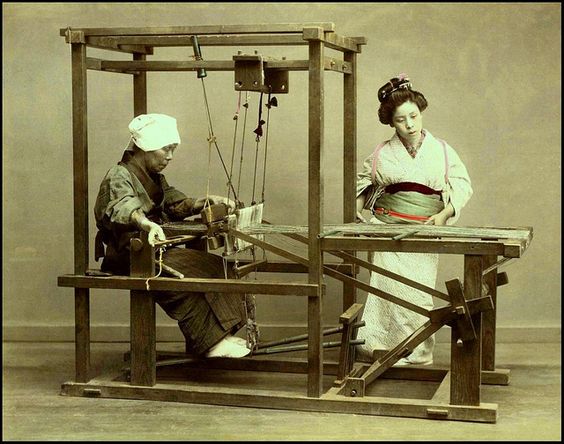
“Cloth” starts off with a primer of basic fabric weaves and the types of looms utilized in different cultures and how they morphed over time. Postrel discusses how patterns were developed and recorded or passed down from artisan to artisan—from ancient Greek weavers who needed to calculate prime numbers mentally, to the development of the Jacquard loom where a system of punch cards stored the data for the pattern (if Turing is the father of modern computing, Jacquard is the grandfather).
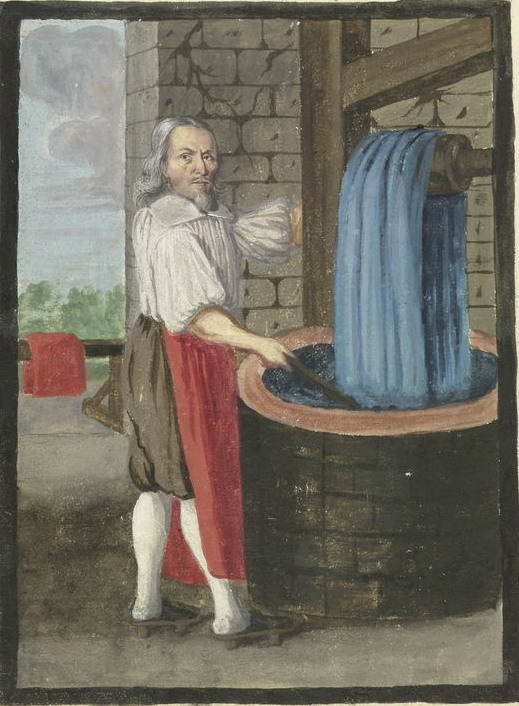
The chapter on dye is probably where I started to geek out the most. I find the chemistry in dye work to be absolutely fascinating. In another life I very well may have gone into organic chemistry. We dive deep into the dye pots in search of brilliant blues, a red more valuable than gold, and finally into the modern dye era with a purple that kicked off the development of synthetic dyes we still use today (with some of the ingredients changed, thankfully).
Postrel then moves on to discuss the merchants and trade routes that spread textiles throughout the world. From the Middle East, to China, to Africa, to Europe textiles became equivalent to currency with cloth traders becoming de-facto bankers. Out of this practice came the one bit in the book that had me literally say out loud “holy #@&!” : (CAUTION: SPOILER! Skip to next paragraph if you prefer) how fabric merchants developed and spread math as we know it today. Yes, math! The son of an Italian merchant trading in Africa learned how to calculate using Hindu numerals and the Arabic zero instead of Roman numerals (sound familiar?). His influence began the universal shift away from the use of Roman numerals in calculations with the publication of his book in 1202. That merchant’s son? Fibonacci. (You probably learned about the Fibonacci Sequence in high school math—a sequence in which each number is the sum of the two preceding numbers). 200 years later in the 1470’s another mathematician took Fibonacci’s “new math” and created a system still in use today: double-entry bookkeeping. Yes, the textile trade is responsible for modern mathematics frustrating accounting students and small business owners to this day.
“Consumers” tells the story of how different patterns, colors, and materials gained in popularity and influenced the market. With competition for the consumer base heating up, innovative ways to speed up production develop, making some textiles once only affordable to the upper classes attainable by all. And that brings us to sumptuary laws—in a nutshell, laws restricting who could buy or wear what under the guise of preventing extravagance and luxury, but really it was all about controlling the masses. Postrel discusses such laws in the Ming dynasty, as well as Italy and England. In all situations the citizenry found fabulous loop-holes. Another fabulous discussion follows on how wax prints arrived in Ghana and took on local meanings.
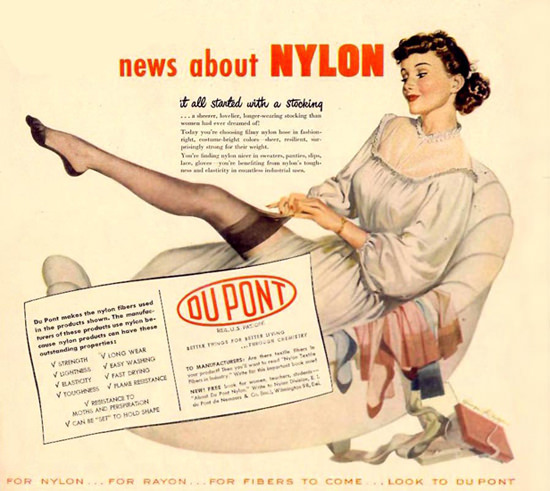
The last section, Innovation, begins with the development of synthetic fibers in the early 20th century, and continues with a discussion of where textiles are headed today. From using silk in non-textile applications, to developing fabrics that never have to be washed, textile science is as strong as ever and continue to impact our daily lives beyond our clothing. Prepare to have your mind blown several more times.
Textiles truly have made the world.
Want to dive down some more rabbit-holes while you’re waiting for the book to arrive? Check out my Fabric of Civilization playlist on YouTube, which includes videos by the author.
Book reviews will always be free, but if you’d like to show your support, you can buy me a virtual coffee.
Want posts delivered right to your inbox? Subscribe below!
 Handmade Digital Creations